Athaliah Elvis ’26, BHC Communications Intern
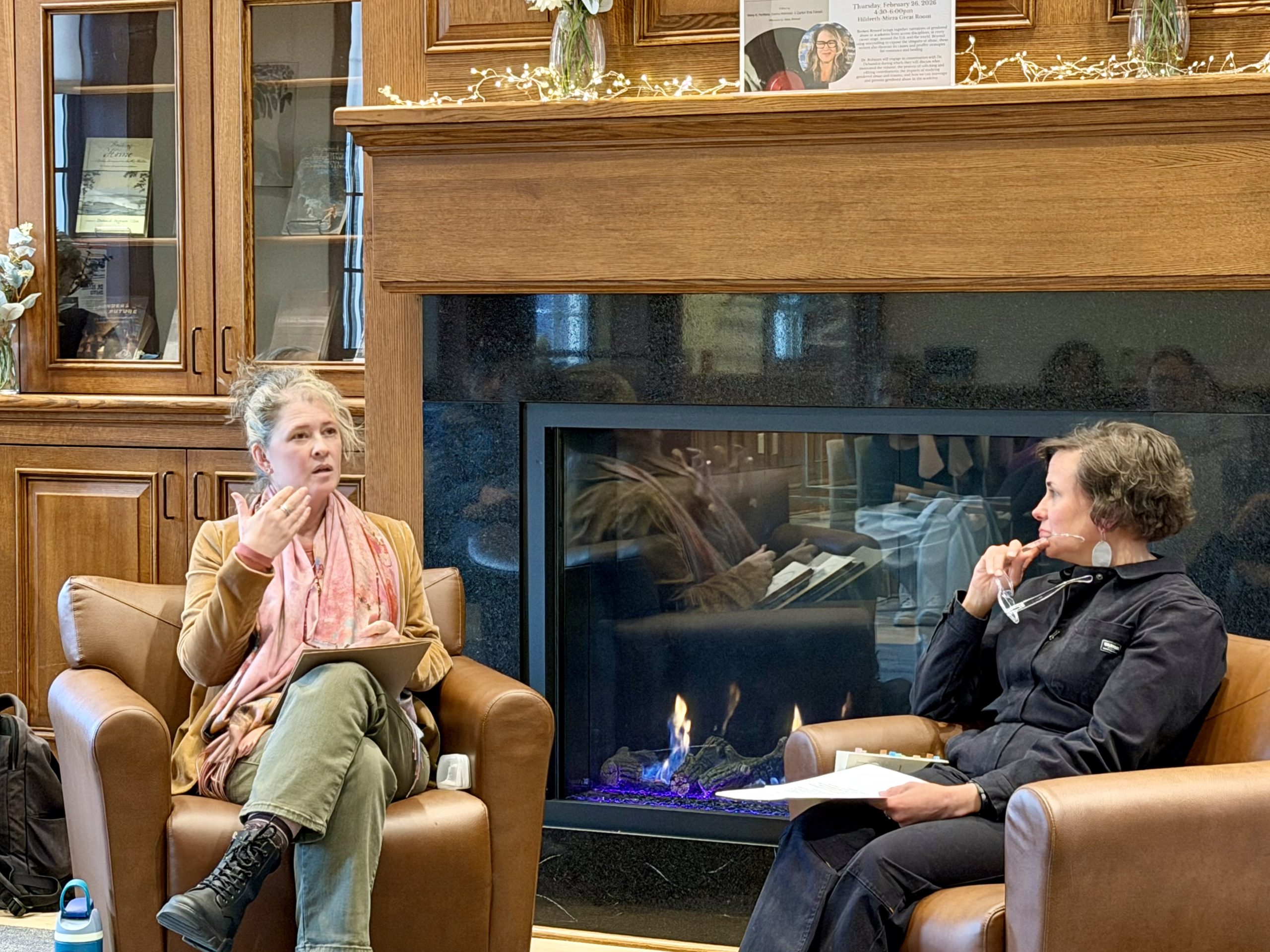
This past Thursday, Feb. 26, the Bucknell Humanities Center, in collaboration with the Department of Women’s and Gender Studies, hosted Carrie Rohman, Professor of English at Lafayette University, for a fireside conversation on the abuse perpetuated on women, both on a collegiate level and professional level, in higher education. The event, titled “Broken Record: Gendered Abuse in Academia,” was moderated by Erica Delsandro, Bucknell’s Associate Professor and Chair of Women’s & Gender Studies.
The two discussed the complex and iterative process by which Dr. Rohman assembled her edited volume Broken Record: Gendered Abuse in Academia documenting patterns of such abuse across various fields. Drs. Delsandro and Rohman also noted about the ways in which both men and women contribute to this cycle of abuse. From threats to one’s tenure as retaliation for filing harassment complaints, or even a simple smile or nod in the face of gender abuse, the co-signing of abusive behavior often goes unchecked. The acceptance of this behavior then discourages victims from speaking about their experience and putting an end to the harm. It also lets toxicity fester in the culture of academia, pushing the well-being, regard, and safety of women onto a back burner to preserve the comfortability of the abusive perpetrators.
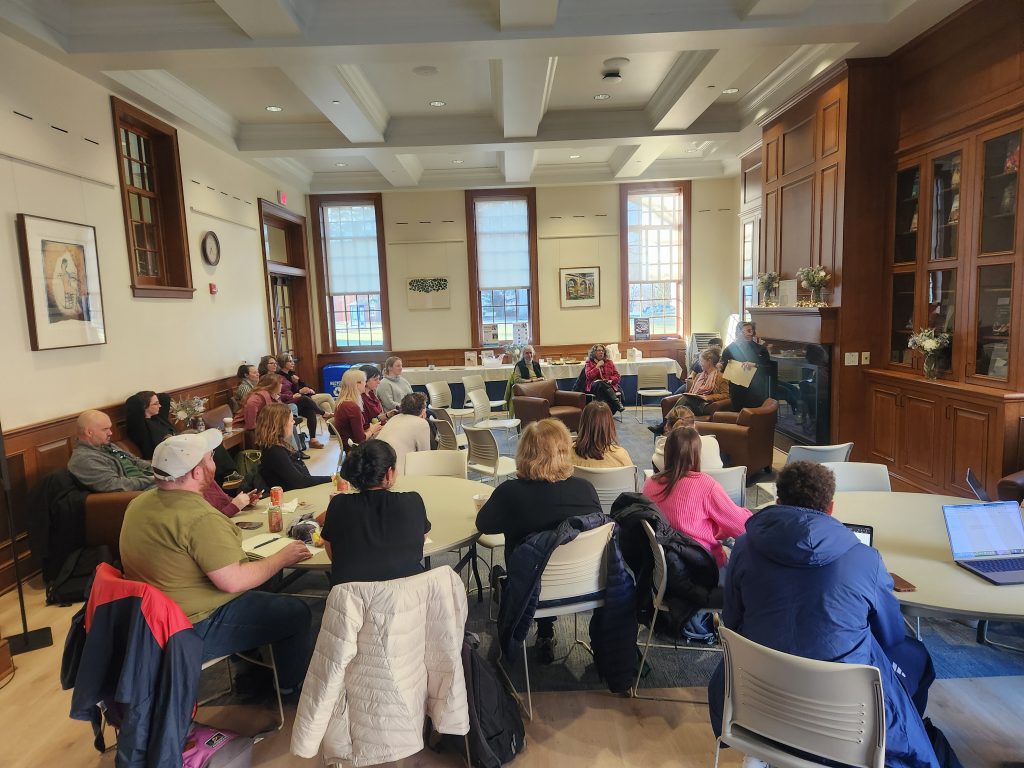
The Gathered Audience
Writer and educator, bell hooks, was at the forefront of my mind during this discussion for her critiques on systems advocating for equality while excluding other marginalized groups. Gendered abuse in academia is a pressing issue which not only affects women, but people of color, especially women of color, members of the LGBTQIA+ community, those who are not able-bodied and many other sectors of marginalization. Equality can not truly be obtained unless everyone of all backgrounds is regarded as deserving of respect and humanity.
Towards the end of the event, Rohman provided a short, yet insightful, reading from her book, Broken Record; Gendered Abuse in Academia, about the ways storytelling can be used to expose the normalcy of abuse, as well as theorize its causes and offer strategies for resistance and healing. She combined these readings with powerful accounts of her personal experiences enduring gendered abuse.
Conversations such as these are more important now than ever, with the turmoil of global conflict, ongoing domestic battles of civility in the United States, and even pop culture controversies such as the misogynistic remarks made about the U.S.A. Women’s Olympic hockey team. Gendered abuse is a problem which affects everyone — and the sooner that is realized, the sooner actual impactful change can be achieved.